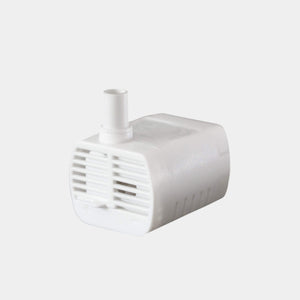



The small pump in the SalinoVatis Mini Saline keeps the brine circulating. Some operating noise is normal. But if it suddenly gets much louder, starts humming or sounds different after the device has been standing unused for a while, that doesn’t automatically mean it’s faulty.
It’s often worth checking the water level, salt deposits and the pump first.
Why does the mini saline have a pump?

SalinoVatis works with a brine circuit. A small pump carries the brine from the container up into the graduation tower, where it spreads over the structure and flows back down. That makes the pump an integral part of how the mini saline works.
Wherever water moves, there’s some noise. A gentle trickling is part of normal operation. Other noises, though, can be a sign that water is running low or that the pump needs cleaning.
Which noises are normal, and which should you check?
Not every sound means the same thing. There are four types to tell apart.
Gentle trickling = normal operation
Humming = usually a sign of a low water level
Distinct whirring = possible salt deposits
Rattling = contact support
The pump may also be more audible straight after you first switch it on, or after a longer dry spell. According to the user manual, it may draw in some air. In that case, Salino recommends cleaning the pump as described in the instructions to clear any air locks.
So if the noise changes, treat it first as a signal:
Does the pump have enough water?
Is it seated correctly?
Are there any deposits?
If you’ve checked all of this and the noise is still there, a technical fault becomes more likely.
Why can a low water level make the pump louder?
The pump is designed to run with enough liquid. If the water level drops, it can start to sound different.
Here’s a useful guide: if the fill level indicator is level with the grid or below it, there’s less than about 1.3 litres of liquid in the container. By then at the latest, top up with water or brine so that the pump runs safely and quietly.
So before you take apart a pump that has become louder, start with the simplest check: look at the water level.
What role do salt deposits play?
The pump doesn’t move pure water, but brine. If the liquid dries on the parts that carry water, salt crystals can be left behind.
Especially after long breaks, or if the pump is switched off often, salt can crystallise around the pump. These deposits can get in the way of the rotor or the space it turns in.
That’s why a pump can get louder even though it still basically works. The rotor needs to turn freely, and deposits inside the pump can interfere with that.
Salt deposits are a common reason for a pump getting louder. Other causes include a water level that’s too low and, much more rarely, a mechanical blockage.
Why is regular cleaning important?
With a mini saline, cleaning isn’t an extra repair job – it’s part of the normal maintenance.
It’s recommended that you change the brine completely and clean the device at least every four weeks. After a break of more than seven days, you should also renew the brine and, if necessary, clear any salt deposits from the pump.
That said, keeping an eye on the device is more useful than sticking to a rigid schedule. If you can see deposits or the pump sounds different, it can make sense to clean it sooner.
How do you clean the pump?

Before cleaning, switch off the mini saline and unplug it. You can then remove the pump as described in the official instructions.
Ease it carefully out of its holder without pressing hard on any of the parts.
Salino describes four steps for cleaning the pump itself:
-
Pull off the side cap of the pump.
-
Remove the intermediate base.
-
Carefully pull out the rotor. The instructions recommend using the pump key supplied or, if necessary, tweezers.
-
Rinse out the exposed area with water to remove any salt residue.
These steps are set out in the “Maintenance and cleaning” chapter of the original operating instructions.
If the pump has been dry for a long time, Salino recommends putting it in a water bath for a few minutes first. If it still doesn’t respond, clean the pump as described.
Can I remove the rotor myself?
Yes, as part of the cleaning described by Salino.
The cleaning procedure described in the user manual is part of the intended maintenance. If you are unsure which steps you can carry out yourself, the support team can help. Follow the current user manual.
Modifying or repairing the electronics is a different matter. The user manual expressly advises against making changes to the design or electronics.
In practice, this means:
You can carry out the pump cleaning described in the official instructions. Anything beyond that, particularly work on the cable, electronics or design, shouldn’t be attempted yourself.
Salino refers to the statutory two-year warranty and recommends contacting support with any warranty questions.
How do you clean the rest of the mini saline?
There are clear guidelines for the housing and the parts that carry water, too.
Only clean the mini saline by hand, with cold to lukewarm water. The current user manual specifies a maximum of 35 °C.
You can soak the graduation tower, grid, tube and brine container in clean water for at least 15 minutes and then clean them with a cloth, sponge or soft brush. For the tube, the instructions suggest a pipe cleaner.
Dishwashers and washing machines are expressly ruled out.
Are white salt deposits a sign of a fault?
Not necessarily.
Salt crystals can form on the graduation tower and other parts that carry water during operation. Light deposits can be loosened with a damp sponge or by wetting them with water, while heavier deposits may call for a thorough clean.
Heat and direct sunlight can also cause more salt to build up, which means more maintenance.
So visible salt on its own doesn’t mean the pump is faulty. But if the pump also gets noticeably louder or the brine flow drops, it’s worth cleaning it as described.
What should I check first if the pump suddenly gets loud?
Rather than assuming it’s faulty straight away, go through these steps in order:
1. Check the water level.
A low fill level can make the pump louder.
2. Check that the pump and tube are seated properly.
If the brine isn’t flowing properly or the pump is loud, the user manual recommends also checking the connections between the pump, tube and graduation tower.
3. Look for salt residue.
Salt in the pump is listed as a possible cause of loud operation.
4. Clean the pump as described in the instructions.
In particular, clear salt residue from the rotor and the space underneath it.
5. Test it again.
If the pump is still noticeably loud or doesn’t work properly, it’s time to contact support.
When should you contact Salino support?
You don’t have to wait until the pump stops working completely.
The Salino FAQ recommends getting in touch if the pump noise persists, if there’s a defect within the warranty period, if there’s mechanical damage or if you have questions about a warranty claim. Rattling noises from the pump are specifically mentioned as a case for support.
The user manual also sets a clear limit: if the pump still doesn’t work properly after you’ve checked the water level, power supply and tube connections and cleaned it, contact customer service.
If there’s damage that could affect safe operation, don’t investigate any further yourself. In that case, the user manual refers you straight to customer service.
You can currently reach Salino at aero@salino.eu or by phone on +49 211 15856577.
https://salino.eu/en/pages/contact
Important for longer periods of non-use:
Allow your saline to dry completely before putting it away, then store it in a dry place to help prevent mould growth.
Conclusion: check and clean first, then think about a fault
An audible pump isn’t automatically a faulty one. The water level, air after a dry spell, salt deposits and how the parts are seated can all change the sound. For these cases, the SalinoVatis user manual sets out clear maintenance and cleaning steps.
The important thing is to know where to stop: cleaning the pump cap, intermediate base and rotor is part of normal maintenance, but work on the design or electronics isn’t. If the pump still sounds wrong after cleaning, or if you hear rattling, the pump stops working or there’s damage, contact support.
This article is for general information only on using and caring for the SalinoVatis Mini Saline. The current user manual is authoritative for operation.