


It's 3:47 a.m. Lisa lies awake. Again. Her thoughts are racing, her throat is scratchy, her eyes are burning. Next to her, her husband sleeps peacefully—how does he do it? Tomorrow there's an important appointment, the children have to go to school, everyday life doesn't allow for tiredness. But sleep remains elusive. What Lisa doesn't know: She's not alone. She's part of a silent epidemic sweeping through German bedrooms—and whose cause is often right under their noses.
40 percent sleep too little – and the actual number is higher.
The figures are alarming, but they no longer surprise anyone. According to recent surveys, around 40 percent of people in Germany report not getting enough sleep. Over 20 percent even rate their sleep quality as poor or very poor. These aren't just statistics – these are millions of people lying awake night after night while the world around them sleeps.
The Techniker Krankenkasse (TK) health insurance company found that 27.6 percent of employees have sleep patterns that are considered "abnormal" with regard to a possible sleep disorder. BARMER health insurance has recorded a continuous increase in outpatient-diagnosed sleep disorders over the past ten years – by two percentage points to over seven percent. This corresponds to approximately one in fourteen people in Germany.
But behind these figures lies an even greater truth: Many people sleep poorly without realizing it. They wake up feeling "somehow exhausted," get through the day with coffee and willpower – and become accustomed to a state that is not normal.
When tiredness becomes the norm

The problem with sleep deprivation is its insidious nature. It doesn't come on overnight, but builds up gradually. Early warning signs are ignored: It takes longer to get up in the morning. Concentration wanes. In the afternoon, a leaden fatigue sets in. Paradoxically, in the evening, you're too tired to go to bed on time – so you end up scrolling through social media for another hour.
Almost half of Germans use electronic devices until just before or even while falling asleep. The blue light from screens disrupts the sleep-wake cycle, preventing the brain from resting. Generation Z is particularly affected. Screen usage is highest among young adults under 24 – and at the same time, sleep quality is lowest.
The consequences are serious: Every day, nearly one in five people feels too tired to concentrate on school or work. Performance declines, and the error rate increases. Over 1,500 road accidents are attributed to fatigue each year. The economy loses billions due to lost productivity. But that's only the material aspect.
Lack of sleep makes you sick. In the long term, it increases the risk of heart attack, diabetes, high blood pressure, and obesity. The immune system weakens. Mental health suffers – depression, anxiety disorders, and burnout are more likely. Sleep is not a break from life. Sleep is life.
What keeps us awake: stress, worries – and the air we breathe.

When asked what keeps them from sleeping, most people name the same suspects: stress, physical ailments, financial worries, relationship problems, the change to daylight saving time, and the full moon.
But there is one factor that is mentioned far too rarely – even though it lies in bed with us every night: the quality of the indoor air.
We spend about a third of our lives in the bedroom. Eight hours, sometimes more. During this time, we breathe in and out thousands of times. But what exactly are we breathing in? Dry air from heating systems. Dust particles. In winter, indoor humidity often drops below 30 percent – a desert-like climate that dries out our mucous membranes.
The nose is our natural gateway to breathing. It filters, humidifies, and warms the air before it reaches the lungs. But when the air in a room is too dry, this system fails. The nasal mucous membranes dry out and become irritated. Some people wake up at night with a burning throat. Others unconsciously begin breathing through their mouths – which worsens the situation.
The invisible cycle: dry air, open mouth, poor sleep
Mouth breathing during sleep is more than just a habit. It's the body's emergency mode. While nasal breathing provides us with 10 to 15 percent more oxygen, has a calming effect on the nervous system, and activates the parasympathetic nervous system, mouth breathing signals to the body: Attention, stress! The sympathetic nervous system remains active. The heartbeat accelerates. True deep sleep becomes more difficult.
And then there's the scratchy throat. The urge to clear your throat. The tickle of a cough that jolts you out of a half-asleep state. Dry airways aren't just unpleasant – they're a gateway for pathogens. In winter, when the heating is on and flu and RSV infections are rampant, an indoor air quality problem can quickly become a health hazard.
Studies show that people with chronically dry mucous membranes are more prone to upper respiratory infections. The lungs' natural self-cleaning mechanism – mucociliary clearance – only functions properly with sufficient moisture. If the cilia are paralyzed, mucus remains trapped, giving pathogens an easy opportunity to enter. The body reacts with inflammation, and sleep becomes even more disrupted.
A vicious cycle ensues: poor sleep weakens the immune system. A weakened immune system makes one more susceptible to infections. Infections disrupt sleep. And dry indoor air exacerbates the whole situation.
The ideal humidity: 40 to 60 percent – and why hardly anyone achieves it.

Experts agree: The optimal relative humidity for healthy sleep lies between 40 and 60 percent. Within this range, mucous membranes remain moist, nasal breathing functions smoothly, and viruses also have a harder time – they dry out more quickly and sink to the ground instead of floating in the air for hours.
But the reality in German bedrooms is quite different. In winter, when temperatures outside are below freezing and the heating is running at full blast, humidity drops dramatically. Values of 20 or even 15 percent are not uncommon. This is comparable to the conditions in the Sahara.
Many people try to counteract this: They place bowls of water on the radiators. They ventilate the rooms briefly and thoroughly. They hang up damp towels. All good approaches – but often only temporary relief. Because as soon as the heating is turned on again, the humidity drops once more.
The challenge is not just humidification itself, but maintaining it consistently. Sleep ideally lasts seven to nine hours. During this time, the humidity must remain constant within the optimal range. And this is precisely where many solutions fail.
When snoring becomes a problem: The connection between room air and nighttime breathing

Another phenomenon that is often underestimated is snoring. Approximately one in two adults over 40 snores at least occasionally. The causes are varied – narrowed airways, being overweight, alcohol consumption, and anatomical peculiarities. But the air quality in the room also plays a role.
Dry mucous membranes swell. The nose becomes congested. The body automatically switches to mouth breathing – and this increases the risk of snoring. The airflow now passes over the soft palate and the uvula, which begin to vibrate when the muscles are relaxed. This produces the typical snoring sound.
For the snorer, it's usually not a problem – they're asleep, after all. But for their partner, it becomes torture. Studies show that almost 40 percent of women sleep better without a partner than with one. Not for emotional reasons, but simply because of the nighttime noise.
But the snorer also suffers, often without realizing it. Snoring is not a sign of deep sleep, but rather the opposite: an indication of disrupted breathing. Oxygen supply can be impaired. In severe cases – known as obstructive sleep apnea – breathing even pauses occur, which can lead to cardiac arrhythmias and, in the long term, heart disease.
Improving indoor air quality can also help here. Moist mucous membranes swell less. Nasal breathing is maintained for longer. The risk of snoring decreases.
What to do? Small changes, big impact
The good news: Sleep hygiene can be learned. And often it's the small, consistent changes that make the biggest difference.
Establish regularity: The body loves routines. Going to bed and getting up at the same time every day – even on weekends – helps regulate your natural sleep-wake cycle. People with a late chronotype ("night owls") especially benefit from respecting their natural sleep times instead of constantly fighting against them.
Reduce screen time: Phones, tablets, and laptops should be off-limits for at least one hour before bedtime. Blue light inhibits melatonin production – the hormone that makes us sleepy. If you can't avoid using them entirely, at least activate a blue light filter.
Create the right environment: The bedroom should be cool (ideally below 18 degrees Celsius), dark, and quiet. Blackout curtains, earplugs, or white noise devices can help. And: The alarm clock should be positioned so that you can't see the time during the night. Nothing is more counterproductive than frantically calculating: "Four more hours until I have to get up..."
Keep an eye on humidity: A hygrometer costs little but provides valuable information. Knowing how dry the air actually is allows you to take targeted action. While airing out a room briefly brings in fresh air, it further reduces humidity in winter. A better solution is to use sources that continuously release moisture without affecting the room temperature.
Salt and sleep: An underestimated connection

Here's where an often overlooked aspect comes into play: salty air. What's taken for granted at the seaside – the moist, salty breeze that feels so good – can also be recreated in your own bedroom.
Salty air has a multi-layered effect. It naturally moisturizes the mucous membranes. The osmotic effect of the salt binds moisture, loosens stubborn mucus, and supports the self-cleaning of the airways. At the same time, salt has an antibacterial effect – making it harder for pathogens to thrive.
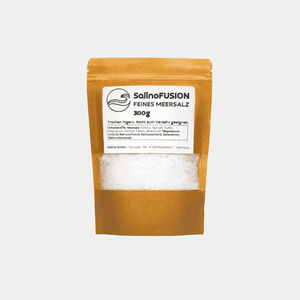
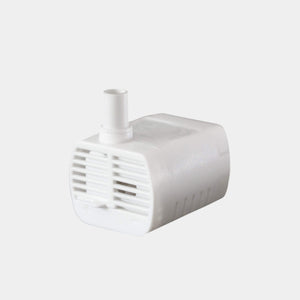
Traditionally, this effect is known from salt caves or spa stays on the North Sea coast. But not everyone can regularly travel to the seaside. This is where modern solutions come in: Compact salt inhalation systems for home use work on the principle of graduation towers. They continuously evaporate a salt solution and enrich the room air with fine salt aerosols – quietly, without filter changes, and without much effort.
The effect is subtle, but noticeable. Many users report easier breathing, less nighttime coughing, and better sleep. Children who previously woke up regularly at night sleep more peacefully. Adults with chronic respiratory problems experience relief.
Of course, a mini saline solution is no substitute for medical treatment. Anyone suffering from severe sleep disorders, chronic sleep apnea, or other serious illnesses should seek medical help. However, as a complementary measure, as part of a holistic approach to better sleep, salty air can be a quiet ally.
Looking beyond the obvious: What other countries do differently
It's interesting to look at other cultures. In Japan, for example, an evening bath before bed is part of the routine. The warmth relaxes the muscles, and the moisture opens the airways. In China, many people swear by a foot bath – a simple but effective method to prepare the body for rest.
In Germany, too, awareness of sleep rituals is slowly gaining importance. Sleep retreats are booming, wellness hotels offer special sleep programs, and apps for sleep optimization are filling app stores. The market for sleep supplements is growing rapidly – worldwide, it is expected to exceed 32 billion dollars by 2035.
But often people look for a quick fix: a pill, a spray, a gadget. Yet the answer often lies in something simple. In returning to basics. In asking: What does my body really need to let go?
Conclusion: Sleep is not a trivial matter – and neither is air.
Germany's sleep crisis is real. It is measurable, it is painful, it costs quality of life. But it is not inevitable.
Improving your sleep doesn't require a complete life overhaul. Often, small adjustments are enough: regularity, darkness, quiet, and, of course, the right air to breathe.
We breathe around 20,000 times a day. A third of these occur while we sleep. These 6,000 to 7,000 breaths should not be made difficult by dry, dusty, or polluted air. They should be light, deep, and nourishing.
Because in the end, it's quite simple: Those who breathe well sleep better. Those who sleep better live healthier lives. And those who live healthier lives have more energy for what really matters.
Lisa is still awake. But since she changed a few things – leaving her phone outside, briefly opening the window before going to sleep, and having a small salt water fountain on her bedside table that gurgles softly – the sleepless nights have become less frequent. Not overnight. But step by step.
And sometimes that's the best way: one after the other.
(Images: Envato)
Note: This article is not a substitute for medical advice. If you experience persistent sleep problems, you should seek medical help.