


The first breath in the morning

It's six o'clock in the morning in Berlin-Mitte. The city is slowly awakening as the first commuters make their way to work. With every breath, they inhale not only the cool morning air, but also an invisible cocktail of substances that tell the story of this metropolis – a story of progress and cost, of urban life and its hidden shadows.
Approximately one-third of the microplastics in urban waterways originate from tire abrasion, which is washed into rivers by rainwater. These tiny particles, between one millionth and one-tenth of a millimeter in size, are invisible to the naked eye, yet their presence is ubiquitous. They float in the air we breathe, they flow through the Spree River, and they seep into the ground beneath our feet.
What does it mean to live in a city whose pulse is dictated by traffic, whose arteries are clogged with more than just cars? In Berlin, polluted air demonstrably leads to more heart attacks – with every increase in nitrogen oxide concentration of ten micrograms per cubic meter, the heart attack rate rises by one percent. This invisible danger penetrates deep into our respiratory tract, can lead to chronic pneumonia, and puts a strain on the heart.
The water carries memories – of pills and plastic.
The hidden chemistry of our everyday lives
When Berlin's water utility reports on its daily work, it sounds like a fight against windmills. At the Tegel waterworks, levels exceeding the guideline value for gabapentin – an active ingredient in painkillers and anti-epileptic drugs – have already been detected. Valsartan acid, a breakdown product of blood pressure medication, is also causing concern for those in charge.
It's a bitter irony: the medications meant to heal us are indirectly returning to us. Significant portions of these drugs are excreted by patients and enter the water cycle via wastewater. A veritable cocktail of active ingredients flows through sewage treatment plants – X-ray contrast agents, antibiotics, painkillers, diabetes medications. Experts agree on their uncertainty: no one can say for sure what the long-term effects of this mixture will be.
The Tegel surface water treatment plant is fighting this invisible flood with state-of-the-art technology. In a pilot plant, the water is treated with activated carbon granules, which absorb a wide variety of trace substances for about 30 minutes. But even this elaborate purification process is merely a band-aid on a gaping wound.
Microplastics – the new currency of urban pollution
The Spree River, once the city's lifeblood, is now a reflection of our throwaway society. Students taking water samples as part of the EU-wide "Plastic Pirates" campaign fished numerous microplastic particles out of the river within an hour. These particles tell stories: of worn-down car tires on the city's highways, of synthetic sweaters in washing machines, of carelessly discarded plastic bottles that break down into ever smaller fragments over centuries.
The Leibniz Institute of Freshwater Ecology is researching at Lake Müggelsee what happens when water fleas ingest microplastics – the animals become sluggish and lethargic. This is a worrying observation, considering that these tiny crustaceans form the base of the aquatic food chain. What begins with the water fleas ends up on our plates.
The air we share – between necessity and danger

When every breath counts
The capital is breathing heavily. For asthma and COPD patients, the risk of being hospitalized on days with elevated nitrogen dioxide levels is significantly increased. Those most affected are the most vulnerable members of our society: children whose lungs are still developing, elderly people with weakened immune systems, and all those already battling respiratory illnesses.
The WHO has tightened its recommended limits, but the reality in Berlin is sobering. In 2021, more than 90 percent of urban populations in EU countries had to live with pollution levels exceeding WHO recommendations. The air we take for granted is riddled with particles that penetrate deep into our lungs, accumulate in our organs, and undermine our health.
The price of mobility

Nitrogen dioxide is primarily produced during combustion processes at high temperatures, and in Berlin, traffic emissions are responsible for 70 to 80 percent of the pollution in inner-city residential areas. Every diesel engine that starts up in the morning, every truck that brings goods into the city, contributes to this invisible burden.
Fine particulate matter of the PM2.5 category – particles smaller than 2.5 micrometers – is considered particularly insidious. These tiny particles can penetrate deep into the respiratory tract and remain there for extended periods, leading to cardiovascular diseases, and the soot they contain is considered highly carcinogenic. Some of these particles are so small that they can travel directly to the brain via the olfactory nerve.
The city has reacted with environmental zones, bike paths, and expanded public transport. But progress is slow, and time is running out. Every day that the limits are exceeded is one day too many for the health of Berliners.
Between despair and hope – ways out of the crisis
The technological revolution underground
Berlin's water utility plans to equip all wastewater treatment plants with a fourth treatment stage by 2027 – an investment of €1.5 billion. This new technology, often referred to as ozonation, is intended to significantly reduce pharmaceutical residues and other trace substances. Construction is already underway in Schönerlinde, and one of Germany's largest powdered activated carbon plants has been operating at the Tegel wastewater treatment plant since 2016.
It's a race against time and against the ever-increasing burden of medication in an aging society. The fourth treatment stage can remove a large proportion of micropollutants from wastewater (Tab-beim-bundestag), but it's only part of the solution.
The responsibility of the individual

Berlin's water utility is appealing to everyone: Even washing sportswear and functional clothing made of synthetic fibers releases tiny particles of Berlin's water utility. Every decision – from buying a cotton sweater instead of a polyester shirt to choosing a mode of transportation – has consequences for the quality of our water and air.
Medications don't belong in the toilet, but in the household waste or at hazardous waste collection points. Cosmetics without microplastics are not a fad, but a necessity. And every kilometer not traveled by car is a small victory for air quality.
A glimpse into the future – and a possible solution for home use
Berlin is at a turning point. The city, which prides itself on being green and livable, must confront its invisible burdens. Investments in clean technologies are enormous, and the societal challenges are complex. But there is hope – in science, which is developing new solutions; in politics, which is setting stricter standards; and in every individual who makes conscious choices.
Scientific findings prove that even small amounts of particulate matter are harmful to health – there is no safe level of particulate matter pollution in Berlin. This knowledge should not paralyze us, but rather spur us to action. Because the air we breathe, the water we drink, connects us all. In a city like Berlin, where millions of people live together in close proximity, the quality of our shared resources is not an abstract concept, but a matter of life and health.
The traces of this metropolis are deeply etched in the air and water. But perhaps this very realization holds the key to a new beginning – for a city that is not only large, but also healthy. A city where the first breath in the morning no longer tastes of exhaust fumes, but of possibilities.
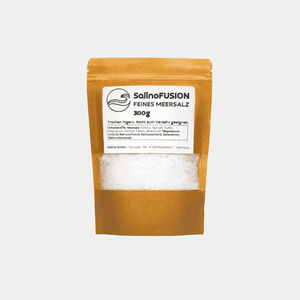
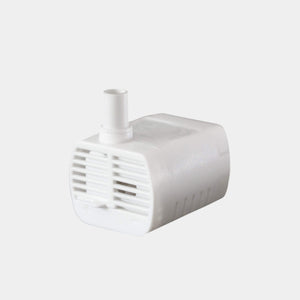
For those who want to create a small oasis of clean air in their home, a mini saltworks – a compact graduation tower for the home – could offer a helpful supplement. This traditional method of air purification, which utilizes the principle of natural salt evaporation, can help humidify the indoor air and enrich it with saline aerosols, similar to what you find in spas. It's not a panacea for the major challenges of air pollution, but perhaps a small step towards a more conscious approach to the air we breathe.