


When warmth becomes a desert – A silent danger in German living rooms
It's an ordinary January morning. The heating hums quietly, and outside the streets are covered in frost. Inside, it's comfortably warm – the thermometer reads 22 degrees Celsius. But while you drink your coffee, something happens that you can't see: the air around you transforms into an artificial desert climate. Only 18 percent humidity – less than in the Sahara at certain times of day.
Your nose starts to burn. Your eyes feel dry. You notice a slight tickle in your throat. "Probably the beginning of a cold," you think. But what if it's not the cold that's weakening you—but the air you're breathing?
Currently, 7.1 million people in Germany are suffering from acute respiratory illnesses. This winter's flu season began as early as the end of November – significantly earlier than in previous years. But while many focus solely on viruses and vaccinations, they overlook a crucial factor: the quality of the air we breathe 20,000 times a day.
The invisible boundary: What 40 percent humidity really means

Humidity sounds abstract. A number, a percentage, barely tangible. But behind this value lies the functionality of our most important defense system – the mucous membranes. The optimal range for human life lies between 40 and 60 percent relative humidity. This range is not a coincidence, but the result of millions of years of evolution.
At 40 percent humidity, an equilibrium is reached: viruses are inactivated more quickly, bacteria have a harder time surviving, and our mucous membranes can function as they should. Below 40 percent, this equilibrium is disrupted. Studies show that influenza viruses remain suspended in the air and infectious for significantly longer at low humidity. What has been measured in laboratories is something millions of Germans are currently experiencing in their own living rooms.
In winter, indoor humidity often drops dramatically. Cold outdoor air naturally holds less water – at zero degrees Celsius, a relative humidity of 69 percent outside corresponds to only 18 percent indoors once the air is warmed to 20 degrees. Heating systems exacerbate this effect. They warm the air without adding moisture. The result: an indoor climate that systematically dries out our airways.
When mucous membranes fail to function

Our airways are not passive tubes. They are a highly complex system of millions of cilia that function like a living conveyor belt. Each cilia moves in coordinated waves, systematically pushing mucus, dust, and trapped pathogens outwards. This mechanism is called mucociliary clearance – the self-cleaning of the lungs.
But this system needs moisture. If the mucous membrane dries out, the cilia slow down. The mucus becomes thick and sticky. Viruses and bacteria, which would normally be carried away within minutes, get trapped. What follows is an invitation: pathogens penetrate deeper, take hold, and multiply. Scientists have discovered that in extremely low humidity, the self-cleaning mechanism of the airways almost completely fails – and respiratory illnesses are significantly more severe.
The mechanisms are clear. And the numbers speak for themselves: Millions of people are affected this cold and flu season. Cold viruses dominate, followed by COVID-19 and influenza. The viruses are here. The only question is: How strong is our first line of defense?
The dilemma of modern living – between warmth and health
Nobody wants to freeze in winter. Turning up the heating is a given, necessary, normal. But what is well-intentioned creates a problem unnoticed. Modern apartments are high-performance insulation systems. Windows seal tightly, walls trap the heat – and with it, the dryness.
In the past, when wood-burning stoves were common and windows were drafty, there was a natural exchange of air. Fresh, humid air constantly flowed in. Today, things are different. Energy efficiency means: heat stays inside, but so does everything else. A four-person household produces up to twelve liters of water vapor per day – through breathing, perspiring, cooking, and showering. But when you ventilate, cold, dry winter air flows in, warms up, and becomes even drier.
It's a paradox: the better the insulation, the more important active air regulation becomes. Airing out the room briefly helps – but only to a limited extent. In January, when temperatures outside are below freezing, even five minutes of cross-ventilation barely brings any moisture into the room. The outside air is simply too dry. What remains is the need to actively reintroduce moisture.
The forgotten risk groups

Those who spend a lot of time at home are particularly affected: children, the elderly, people requiring care, and those working from home . Their exposure to dry air from heating systems is constant. Children have smaller, more sensitive airways – their mucous membranes dry out more quickly. Elderly people often have chronic conditions such as COPD or asthma, where dry air exacerbates symptoms.
The skin also suffers. Atopic dermatitis patients report that their symptoms worsen in winter – not only because of the cold, but also because of the indoor air quality. The skin barrier becomes more permeable, and inflammation increases. Approximately one in four young children in Germany is affected. For them, winter is not just a cold season, but a time of constant skin pain.
Even healthy adults feel the effects: difficulty concentrating, headaches, a general feeling of unease. Scientists have proven that cognitive performance can decline significantly in poor indoor air quality. What we perceive as fatigue is often a combination of oxygen deficiency, pollutant exposure, and insufficient humidity.
Why 2026 will be different – A flu wave that was predicted
This winter is no ordinary winter. The flu season started earlier, new influenza strains are dominating infections, and vaccination rates are at a historic low. Experts are warning of a particularly severe season – similar to Australia, where the worst flu season in years raged during the southern summer. Hundreds of thousands of influenza cases, with a particularly high number of young children affected. A warning sign for the Northern Hemisphere.
In Germany, data from the Robert Koch Institute shows a clear trend: The activity of acute respiratory illnesses has been rising steadily since mid-November. Wastewater monitoring confirms elevated viral loads of influenza, SARS-CoV-2, and RSV. What does this mean in concrete terms? Millions of people are ill simultaneously – and the strain on the healthcare system is increasing.
The role of indoor air in the infection process
But the viruses aren't the only problem. It's the environment in which they spread. At humidity levels below 40 percent, two things happen: Aerosols – tiny droplets in which viruses travel – shrink. They become lighter, remain suspended in the air longer, and penetrate deeper into the lungs. At the same time, the viruses themselves remain infectious for longer. At optimal humidity levels between 40 and 60 percent, they are inactivated more quickly. The aerosols become heavier and sink to the ground. The risk of infection decreases.
The German Federal Environment Agency has confirmed in several studies that humidity is an underestimated factor in infection control. This applies not only to influenza but also to COVID-19. Maintaining indoor humidity at 40 to 60 percent creates an environment in which viruses have a harder time multiplying. It's not a guarantee, not a miracle cure – but it makes a measurable difference.
What really helps – Beyond bowls of water and laundry

Everyone knows the classic tips: bowls of water on the radiator, hanging up damp towels, drying laundry in the room. But are these methods really effective? The answer is sobering: only to a limited extent. A bowl of water evaporates slowly, uncontrollably, and often not enough. Damp towels increase humidity locally, but not sustainably. Laundry in the bedroom can even promote mold growth if there is insufficient air circulation.
Electric humidifiers are an option – but not without risk. Evaporators heat water, killing germs, but consume a lot of energy. Nebulizers produce a fine mist, but can become breeding grounds for bacteria if hygiene is poor. Evaporative humidifiers use cold water, are energy-efficient, but often ineffective in large rooms. And all these devices have one thing in common: they need regular cleaning, otherwise they become a health hazard.
Salt as a natural moisture reservoir
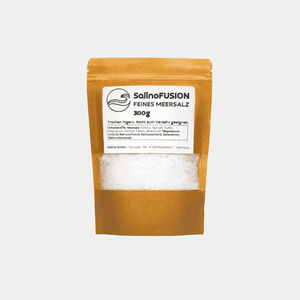
Another approach is the use of salt air. Salt has a natural osmotic effect – it attracts water, binds it, and releases it slowly. Graduation towers, like those found in health resorts, have used this principle for centuries. Brine trickles over brushwood walls, evaporates, and enriches the air with fine salt particles. The result: air that is not only more humid but also salty – a combination that has been proven to benefit mucous membranes.
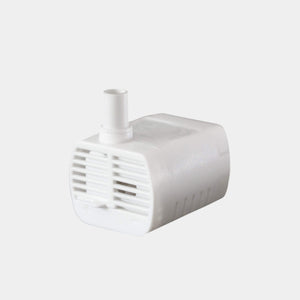
Modern mini saline humidifiers bring this principle into the living room. A closed system in which a saline solution flows over special TPMS structures, evaporates, and continuously humidifies the room air. No filter, no cartridge changes, no risk of germs. Just water, salt, and quiet operation that blends seamlessly into everyday life. For people with respiratory problems, this can provide noticeable relief – not as a therapy, but as support.
First steps – Small changes, big impact
Measuring humidity is the first step. A hygrometer often costs less than ten euros, but immediately shows the state of your indoor air. Measuring helps you develop a sense of when the levels become critical. In the morning after getting up, in the evening after hours with the heating on – the fluctuations are often greater than you might think.
Regular ventilation remains important, even in winter. Not to bring in moisture, but to let out CO₂ and pollutants. Three to five times a day for five to ten minutes – with windows fully open. Cross-ventilation is best, if possible. Turn off the heating during ventilation to avoid wasting energy. Afterwards, rebuild the humidity through conscious indoor climate management.
Room temperature also plays a role. The warmer the air, the more moisture it can theoretically hold – but the drier it feels when moisture is lacking. 20 to 22 degrees Celsius is ideal in the living room, while 16 to 18 degrees is sufficient in the bedroom. Don't overheat. If you feel chilly, put on a sweater instead of turning up the heat.
Drinking, inhaling, caring
The mucous membranes need moisture – both externally and internally. Two liters of water or unsweetened tea a day help keep mucus thin. Inhaling saline solution specifically moisturizes the airways, stimulates blood circulation, and loosens stubborn mucus. Regular nasal rinses with a saline solution cleanse the nose, remove dust and pathogens, and keep the mucous membrane supple.
Nasal balms or moisturizing nasal sprays can also help if the nose is already dry and irritated. Important: Do not use decongestant nasal sprays, except in cases of acute rhinitis. These dry out the mucous membranes further and can lead to addiction with prolonged use. Products containing dexpanthenol or hyaluronic acid, which soothe and protect, are better.
The line between prevention and obsession
It's not about creating a perfect indoor climate. Perfection is unattainable, and trying to force it causes more stress than is healthy. It's about awareness. About understanding that air isn't simply air. That it affects us, every day, every hour, every breath.
Knowing your humidity level allows you to react. Understanding the connections – between dryness and susceptibility to infection, between heating and mucous membrane health – allows you to counteract the effects. Not with fear, but with simple, practical measures. Small changes that, in total, make a difference.
Conclusion: Air is more than what we cannot see.
We breathe 20,000 times a day. Every breath carries something into us – oxygen, but also moisture, particles, and pathogens. Our mucous membranes are the first line of defense, a living system that works without us even noticing. But when the humidity drops below 40 percent, this system fails. The consequences are measurable: more infections, more discomfort, more suffering.
2026 will be a winter that reminds us that prevention isn't just about vaccinations and handwashing. It also means shaping the environment we live in. Indoor air quality isn't a luxury, it's a matter of health. Those who act now – measuring, ventilating, humidifying – create a foundation on which our respiratory system can function properly.
Some people rely on salt-infused air. A mini saline humidifier can provide continuous humidification with a fine salt concentration in close proximity to sleeping or working areas. It's quiet, requires little maintenance, and no filter changes are needed. Not as a therapy, but as a complementary measure in everyday life. A way to bring home what's taken for granted at the seaside: air that's easy to breathe.
Ultimately, it comes down to a decision: continue living as before and hope the cold passes you by. Or understand that health also begins in the air we breathe. In the 40 percent that can make all the difference. In the quiet decision to no longer take our airways for granted – but to treat them for what they are: the beginning of everything.
(Image source: Envato)
Medical note:
This article is for general information purposes only and does not replace medical advice, diagnosis, or treatment. If you have existing respiratory illnesses, chronic conditions, or any concerns about your health, please consult your doctor. The measures mentioned for improving indoor air quality are intended as supplementary preventative measures and do not replace medical therapy.