


Pets share our home, and with it our indoor air – including the dry heated air of winter. Anyone who wants to make their home more pleasant with salt-enriched air or a humidifier rightly asks: is this okay for dogs, cats and other animals? The short answer: there is little to object to in a passive, quiet device, as long as it stands securely and the animal cannot get to the brine. Here is what matters.
Dry air affects animals much as it does people
Animals also have mucous membranes in the nose and airways that are more easily irritated when the air is very dry. Indoor humidity in the 40 to 60 percent range cited by Germany's Federal Environment Agency is therefore more comfortable not only for people. This is a matter of comfort and room climate, not a treatment promise: for health questions about your animal, the vet is the right person to ask.
Why quiet and passive is a real advantage
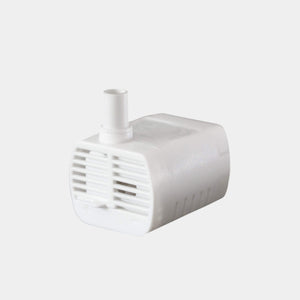
Many humidifiers work with ultrasound. To us they are quiet, but dogs and cats hear much higher frequencies and may perceive such devices as shrill and unpleasant. A passive mini-saline works without ultrasound and without misting. It evaporates the brine using only a small pump, and many animals find the quiet dripping rather soothing. For noise-sensitive four-legged friends, that is a noticeable difference.
Setting it up safely: the key points
- A stable, hard-to-reach spot. Curious cats and dogs can knock a device over. It is best placed on a stable, level surface away from the usual walking routes, and raised up in the early days.
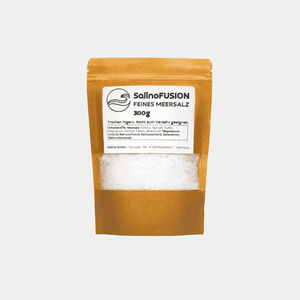
- Keep the brine out of reach. The salt solution is not meant for drinking. Small amounts of salt water are usually harmless, but animals should not take in larger amounts. Position the device so the animal cannot regularly reach the brine; a cover or a barrier can help if needed.
- Watch the reaction. At first the dripping device can seem almost hypnotic. Watch how the animal reacts and adjust the location. Once it has got used to it, the device can also run unattended.
- Keep it clean. Clean it regularly and make sure no salt residue reaches surfaces the animal can get to.
Passive use fits into family life
The advantage of a passive mini-saline: there is nothing to actively "apply". Set the device up, fill it with water and brine, and that's it. The salty note is most noticeable within about one metre; anyone who wants to use the salt-enriched air places the device where a person or animal spends longer periods. Once the animal is used to the device, a spot near its resting place can make sense – bearing in mind that nothing gets knocked over when getting up.
Conclusion
Salt-enriched, sufficiently humid indoor air can make a shared living space more pleasant for people and animals alike. A passive, quiet mini-saline is well suited to this because it does without shrill ultrasound tones. What matters is a safe location and access to the brine. For health questions about your animal, the vet's practice remains the right place to turn.
Frequently asked questions
Is salt-enriched air dangerous for pets? The air itself is unproblematic. What to watch is that the animal does not drink the brine and does not knock the device over.
Why a passive mini-saline instead of an ultrasonic device? Ultrasonic devices can be audible and unpleasant for animals. A passive device works without these high frequencies.
Where is the best place to put the device with pets around? Somewhere stable, away from walking routes, and positioned so the animal cannot get to the brine.