


When the voice fails – A silent threat for frequent speakers
It's just before eight in the morning. The teacher stands in front of the class, clears her throat. A slight tickle in her throat. "It'll be fine," she thinks, as 28 pairs of expectant eyes look at her. Six hours later, after the last parent-teacher conference, her voice is barely a whisper. Hoarse, shaky, exhausted. Tomorrow the same thing again. And the day after.
A few kilometers away, an opera singer sits in his dressing room. Premiere in three days. He swallows. Feels the dryness. The slight burning sensation. "Not now," he hopes. But he knows the feeling. Knows the fear that his voice—his instrument, his profession, his livelihood—might fail him right now.
And somewhere in between: the call center employee who's been on the phone for eight hours straight. The presenter who can barely speak after the third recording. The actor whose voice sounds hoarse after the matinee.
What do they all have in common? Their voice is more than just communication. It's a tool. Capital. A livelihood. And it's vulnerable – more sensitive than most realize. Because while we worry about ergonomic office chairs, we underestimate the invisible: the air we breathe. The moisture – or rather, the lack thereof – surrounding our vocal cords. The fact that dry air from heating systems in winter weakens more voices than any infection.
This article shows why singers like Jonas Kaufmann swear by salt air, what teachers can learn from the North Sea – and why the solution to hoarseness sometimes lies not in the pharmacy, but in the indoor climate.
The vocal cords: A marvel of mucous membrane and vibration

How voice is produced – and why it is so vulnerable
In the larynx lie two delicate, elastic folds of tissue. Less than two centimeters long, covered by a wafer-thin layer of mucous membrane: the vocal cords. When we speak, air flows upwards from the lungs. The vocal cords close and begin to vibrate. In normal speech, this happens about 100 to 300 times per second. A soprano can vibrate over 1,000 times per second. For this high-frequency vibration to function properly, the vocal cords need a thin film of mucus. This film makes the vibration smooth. Without it, the surface becomes rough. The vocal cords rub against each other. The result: hoarseness. And this mucus film is extremely susceptible to dry air.
The winter trap: When dry air from heating becomes a strain on the voice.
In winter, indoor humidity drops dramatically, often reaching only 10 to 20 percent. Ideally, it should be between 40 and 60 percent. The vocal cords lose moisture, the mucus layer becomes thinner and more brittle, and the mucous membrane produces more mucus – thicker and stickier. The feeling: the voice is hoarse. The reaction? Clearing the throat. A fatal mistake. Clearing the throat causes the vocal cords to slam together. This further irritates the already sensitive surface, causing the mucous membrane to swell. The body then produces even more mucus, creating a vicious cycle.
It gets worse at night. Those who sleep with their mouths open breathe dry air directly over their vocal cords for hours. In the morning: the morning voice. Scratchy, rough, unbalanced. For people who use their voice professionally, this is more than just discomfort. It's a real threat.
The Talkative People: When the Voice Becomes a Professional Tool
Teachers, singers, speakers – high performance in continuous operation
Approximately 30 percent of all employed people work in so-called speaking professions. Teachers, educators, lecturers, call center employees, actors, singers, presenters, lawyers. They all have one thing in common: their voice is their most important work tool. And they use it extensively.
An elementary school teacher speaks for an average of 30 hours per week – often fighting against a considerable noise level. An opera singer has to raise her voice to an intensity ten times greater than that of a normal conversation. A call center employee talks on the phone for six to eight hours straight, without any real breaks for the voice.
The statistics are alarming: Teachers have a 30 percent higher risk of suffering from chronic voice problems. Singers frequently develop vocal cord nodules – small, irregular thickenings at the edge of the vocal cords caused by persistent overuse. These "singer's nodules" prevent the vocal cords from closing properly. The voice sounds hoarse, airy, and less resonant.
For those affected, this means more than just discomfort. It means professional limitations, sick days, and existential fears. A teacher who is absent for weeks because her voice has failed faces a problem that goes far beyond "a little hoarseness".
The underestimated risk: Chronic laryngitis

Besides acute infections, there is also chronic laryngitis. This develops due to persistent overuse, incorrect vocal technique, and environmental factors: smoking, dust, chemical fumes, and dry air. People in rooms with poor air quality are particularly affected. Classrooms with outdated ventilation systems, offices with air conditioning, and theaters with enclosed spaces are all contributing factors. The consequences: The voice tires more quickly, vocal range decreases, speaking becomes strenuous, and eventually, the voice is lost altogether.
Clearing your throat, whispering, silence – what really damages your voice
The biggest mistakes when dealing with hoarseness
People who are hoarse often do exactly the wrong thing.
Clearing your throat: The vocal cords press together with great force. This further irritates the inflamed mucous membrane. Even more swelling, even more mucus.
Whispering: Many believe that whispering is gentle on the vocal cords. The opposite is true. The vocal cords work under extreme tension without vibrating properly. This is more strenuous than normal speaking.
Speaking through hoarseness: The lesson must be given. The audience is waiting. So you keep speaking. Louder, more strained. The vocal cords swell. Mild hoarseness develops into chronic inflammation.
Why vocal technique alone is not enough
Singers learn breathing techniques, vocal production, and resonance chambers. Speech therapists train with teachers. All of this is important. But even the best technique can't compensate for one thing: a hostile environment. Working in a room with ten percent humidity will strain your voice—no matter how good your technique is. The voice is embedded in its environment. And this environment plays a crucial role in determining whether the voice remains healthy—or fails.
Salt air: The natural voice protection remedy from the North Sea
Why professionals swear by salt – the examples speak for themselves.
An internationally renowned opera singer sums it up perfectly: His voice has to function reliably. Every night. Every performance. Every rehearsal. A failure is not an option. He swears by salt inhalation . "It's well known that mucous membranes heal much, much faster at the seaside," he explains. "The only problem is: You can't take your beach house with you. And that's how I came to salt inhalation, to easily take my sea breeze home with me and, above all, when I travel."
For him, saline inhalation has long since become a trusted companion. "Salt has a strong disinfectant effect and ensures that the vocal cords regenerate faster." The tiny salt particles disperse in the air, penetrate deep into the lungs, and reach the vocal cords directly. A children's book author who regularly gives readings also swears by humidified inhalation with saline solutions. "During readings, I have to be able to rely on my voice. As soon as I feel the slightest hint of hoarseness, I start humidified inhalation." The humidification keeps the vocal cords supple, supporting free breathing without throat clearing or coughing.
The science behind salt aerosols – How salt protects the vocal cords

Why does salt work? The answer lies in osmosis. Salt attracts water. When fine salt particles come into contact with the mucous membranes of the vocal cords, they bind moisture. The mucous membrane becomes thicker, more stable, and more elastic. The vocal cords can then vibrate freely again.
In addition, salt has antibacterial and anti-inflammatory properties. It reduces the colonization of pathogenic bacteria in the respiratory tract. Inflammation subsides more quickly. The mucous membrane regenerates.
Studies show that salt aerosols promote the self-cleaning mechanism of the airways. The cilia in the bronchi function better. Mucus is thinned and can be transported away more easily. The airways remain clear.
Another advantage: Salt aerosols of the right particle size – under five micrometers – penetrate deep into the lungs. They reach not only the vocal cords but also the lower respiratory tract. This is particularly important for people with chronic respiratory diseases, who often also suffer from hoarseness.
Dry salt vs. steam inhalation – The crucial difference
Steam only provides short-term humidification. The droplets are too large and remain in the upper respiratory tract. They are often too hot and further irritate the mucous membranes.
Salt aerosols consist of microscopically fine particles. They float in the air, penetrate deeply, and have a long-lasting effect. They leave a protective film on the mucous membranes.
Furthermore, salt has a disinfectant effect that steam does not. Gargling with salt water also only reaches the throat. The vocal cords are located deeper, in the larynx. To reach them, one has to inhale the salt particles.
Salt air in everyday life: How frequent talkers benefit from passive inhalation
The North Sea in your living room
A few days at the seaside, and your airways feel clearer. Your nose is no longer blocked, your cough subsides, and your voice sounds clearer. This is due to the salty sea air – inhaled passively for hours, without effort.
Modern salt air applications utilize this effect for home use. Not as active inhalation, but as passive room humidification. A small graduation tower continuously releases saline aerosols into the room air. You sit, work, sleep – and breathe in saline air at the same time.
Ideal for frequent speakers: No change in routine, no interruptions. The salty air is there, in the background – and effective. Those who sleep in salty air at night wake up with moistened vocal cords. No more morning voice.
Prevention instead of repair
Most people only react when their voice is already hoarse. But that's too late. Hoarseness is a warning sign. Prevention is better. Anyone who uses their voice professionally should protect it – before it gives out. This means: regularly ensuring optimal humidity. Salt air is a natural way to do this. No medication, no side effects. Just a room climate that supports the vocal cords.
Professionals rely on daily use. Before important performances, they intensify the exposure. The results: Fewer sick days. Faster recovery. A more stable voice throughout the year.
Voice care begins with the air in the room.
It's a paradox of our time. We invest in singing lessons, voice therapy, and lozenges. We pay attention to our diet and drink liters of tea. And yet, we overlook the obvious: the air we breathe. Vocal cords are delicate, sensitive structures. They need moisture, protection, and a stable environment. Dry air from heating systems is their greatest enemy. Salty air, on the other hand, is their natural ally.
For singers, teachers, speakers – for everyone who relies on their voice – the message is clear: voice care begins with the air in your home . Not just when your voice is hoarse, but every day. Preventively. Continuously. Naturally. The North Sea has shown us for centuries how beneficial salty air is for the respiratory system. People travel to the sea to heal their mucous membranes. But you don't have to go to Sylt every time. You can bring the salty air home with you.
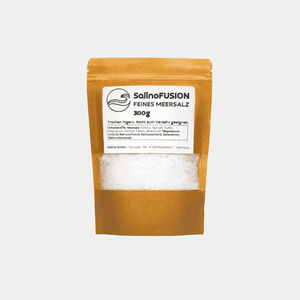
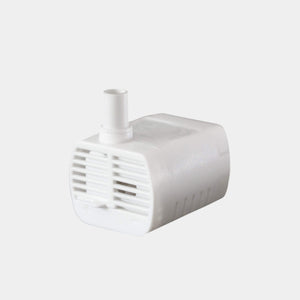
Some people use compact salt humidifiers for this purpose – a small graduation tower that enriches the room air with fine salt particles. Passive, quiet, in the background. While you work, sleep, or practice. No active inhalation, no interruption. Just a room climate that supports rather than burdens. The voice is a gift. For some, it's more: a profession, a passion, a livelihood. It deserves protection. And that begins with the first breath of the day – in air that doesn't burden, but heals.