


When the weather is unpredictable – and your respiratory system has to go with it.
It's that one moment many know all too well: frost on the windshield in the morning, then suddenly ten degrees Celsius and drizzle at midday, and sub-zero temperatures again in the evening. January 2026 is showing its most capricious side. After the icy Christmas days, which brought persistent frost and a blanket of snow to many places, a warm front is now rolling in – only to be replaced a few days later by the next cold wave. Meteorologists speak of polar vortex disturbances and easterly wind patterns. For most people, this means one thing above all: constantly changing clothes, sometimes a winter jacket, sometimes just a light coat.
What's often forgotten is that it's not just our wardrobe that needs to adapt. Our respiratory system is also under constant stress. It reacts to every temperature change, every shift in humidity. And while we're experiencing thaws and frosts outside, a completely different climate prevails inside – one we've created ourselves. With heating systems that sometimes run at full blast, sometimes are turned down. With windows that we throw open when it's mild outside and close tightly as soon as the cold returns.
This article is about what happens between these extremes. About the silent battle our mucous membranes wage every day. And about how we can help them.
The weather in January 2026: A rollercoaster of temperatures

The current weather situation is unusual even for experienced meteorologists. After one of the coldest Christmases in fifteen years, a major thaw arrived at the beginning of January. Temperatures rose to double digits above freezing in some places, and the snow turned into gray slush. But no sooner had people gotten used to the mild weather than the wind shifted. Colder air is now flowing in again from the east, and forecasts indicate a return of winter.
For the body, this means constant adaptation. Blood vessels alternately dilate and constrict, and the circulatory system works at full capacity. The respiratory system is particularly affected. It is the gateway for everything we breathe – and it must warm the air, whether icy cold or warm and humid, to body temperature before it reaches the lungs.
Why temperature changes put a strain on the mucous membranes
The nasal mucosa is a small marvel of evolution. It filters dust and pathogens, humidifies the air we breathe, and warms it. All this happens in fractions of a second, about twenty thousand times a day – that's how often we breathe on average. But this system has its limits.
When outside temperatures fluctuate significantly, the mucous membranes become unbalanced. In cold weather, the blood vessels in the nose constrict, blood flow decreases, and less mucus is produced. As a result, the mucous membranes dry out. In warm weather, the vessels dilate again, and mucus production increases—sometimes excessively, leading to a runny nose. This constant change is like a never-ending workout. Eventually, the system becomes fatigued.
There's a second factor at play: the dry air from the heating. As soon as the outside temperatures drop, we turn up the heat indoors. The warm air flowing from the radiators is extremely dry. It draws moisture from the room air, and thus also from our mucous membranes. The ideal indoor humidity is between 40 and 60 percent. In winter, it often drops to 20 percent or less – a level otherwise only found in desert regions.
Dry air from heating systems: The underestimated danger

It's a paradox: we heat our homes to protect ourselves from the cold – and in doing so, we harm our health. The dry air from heating systems not only attacks the nasal mucous membranes, but also the bronchi, the throat, and even the skin. The fine cilia that line our airways and transport dirt and pathogens outwards like a conveyor belt become sluggish. The protective film of mucus, which normally traps viruses and bacteria, becomes thin and porous.
The effects are measurable. Studies show that cold viruses remain suspended in the air longer and retain their infectivity at low humidity. At the same time, mucous membranes are less resistant. It's like lowering the drawbridge of a castle while simultaneously sending the guards home.
Those who are particularly at risk
Not everyone reacts equally sensitively to dry air and temperature changes. People with chronic respiratory illnesses such as asthma or COPD are particularly affected. Even a minor stimulus can trigger an attack in them. Allergy sufferers also experience increased discomfort, as dry air stirs up house dust and other allergens, which can then penetrate deeper into the airways.
Children are also a high-risk group. Their airways are smaller and more sensitive, and their mucous membranes are not yet fully developed. Parents are familiar with the phenomenon: as soon as the heating season begins, one cold follows another. What is often dismissed as a "kindergarten virus" is frequently also related to the indoor climate.
And then there are the elderly. With increasing age, the function of the mucus-producing cells declines. The self-cleaning mechanism of the airways no longer works as efficiently. Dry air exacerbates this problem.
Mucous membranes as the first line of defense
To understand why humidity is so important, it's worth taking a look at how our respiratory system works. The nasal mucosa is covered with millions of tiny cilia that move in coordinated wave-like motions – about a thousand times per minute. They transport a thin film of mucus, in which inhaled particles, bacteria, and viruses become trapped, towards the throat. From there, the invaders are either swallowed and rendered harmless in the stomach or coughed up.
This system, known as mucociliary clearance, only works if the mucus has the right consistency – not too thin, not too thick. If the mucous membrane dries out, the mucus becomes viscous and sticks together. The cilia can no longer move it. Pathogens that should have been removed long ago remain and can multiply.
When the protective shield crumbles
Many people first notice the effects in their nose. It starts to itch and burn. Crusts and scabs form. Some experience nosebleeds because the dried-out mucous membrane cracks. Doctors call this condition rhinitis sicca – dry nasal inflammation. It's not a disease in the true sense, but it opens the door to other illnesses.
The throat also suffers. The scratchy feeling in the throat, which many interpret as the first sign of a cold, is often nothing more than irritated, dried-out mucous membranes. Only when viruses or bacteria have overcome this weakened barrier does the actual infection begin.
Practical measures for a healthy indoor climate

The good news: There are things you can do about dry air from heating systems. And it's often the simple things that make the biggest difference.
Regular ventilation is the first step. Open the windows wide three to five times a day for five minutes each time – this ensures fresh air and regulates humidity. Important: Turn down the heating while ventilating to save energy.
A hygrometer, a simple measuring device for humidity, provides guidance. It costs just a few euros and immediately shows whether the indoor climate is within the optimal range or not. As a rule of thumb: below 40 percent humidity, it becomes critical for the mucous membranes; above 60 percent, the risk of mold growth increases.
Room temperature also plays a role. Every degree less means less dry air. Twenty to twenty-two degrees Celsius in living areas and sixteen to eighteen degrees Celsius in bedrooms are considered ideal.
In addition, there are tried and tested home remedies that can help:
-
Bowls of water placed on the radiator increase the humidity through evaporation.
-
Houseplants such as papyrus or sedge release moisture through their leaves.
-
Damp towels hung on a clothes drying rack act like natural humidifiers.
Supporting the mucous membranes from within
Besides improving the indoor climate, you can also do something directly for your respiratory system. Drinking enough fluids – at least one and a half to two liters a day – keeps mucus thin. Nasal rinses with saline solution cleanse the nasal passages and moisturize the mucous membranes. Soothing nasal sprays or ointments can help at the first signs of dryness.
Inhaling salt water is particularly effective. The fine salt particles coat the mucous membranes, bind moisture, and support the natural cleansing function. This principle is not new – it has been used for centuries in graduation towers and on the seaside, where the salty air has its beneficial effects.
A piece of sea air for your home
The longing for the sea is especially strong in the winter months. Not only because of its vastness and light, but also because of the air. Anyone who has ever vacationed on the North Sea or Baltic Sea knows the feeling: breathing becomes easier, the nose is clear, and the constant urge to clear the throat disappears. It is the salty air that produces this effect.
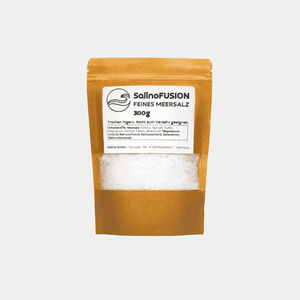
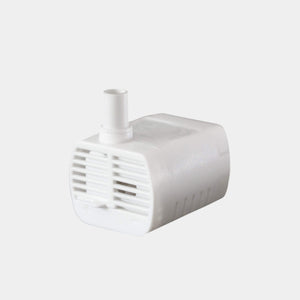
Some people seek this effect in salt caves or through traditional inhalation. Others have found a more elegant solution: mini salt inhalers for home use. These compact devices work on the principle of a graduation tower. Saltwater trickles over a special structure, evaporates, and enriches the room air with fine salt particles. No electricity, no filters, no fuss.
Such a mini saline solution is no substitute for medical treatment. But it can make everyday life easier – gently, subtly, like a silent companion that improves the indoor air quality while we sleep, work, or read. Especially in the winter months, when the weather outside is unpredictable and the heating is on, this can make a noticeable difference.
Conclusion: Helping the respiratory system through the winter
January 2026 presents us with challenges. The weather alternates between thawing and freezing, the heating is on, and the air is dry. Five million Germans currently have colds, and the flu season has not yet reached its peak. In this situation, it is worthwhile to turn our attention inward – to the indoor climate, which we can shape ourselves.
Our mucous membranes perform incredibly demanding work every day. They filter, moisturize, warm, and protect. But they need the right conditions to function properly. A humidity level between 40 and 60 percent, regular ventilation, and sufficient fluid intake are the basics. For those who want to do something extra, salt-rich air is an ally that has proven its effectiveness for centuries.
Ultimately, it's not about controlling the weather. We can't do that. But we can control what happens within our own four walls. And that's perhaps the most important protection we can give our respiratory system – especially now, when temperatures outside are fluctuating wildly.