


The air smells of spring, of freshly cut grass and damp earth. The wind carries the coolness of the North Sea across the dikes of Schleswig-Holstein, sweeps through the forests of the Wendland region, and whispers across the wide fields of Lower Saxony. Country air – a promise of purity, health, and authenticity. But for people with respiratory illnesses, this dream is increasingly becoming a nightmare. What sounds idyllic harbors an invisible danger: ammonia from intensive livestock farming, which breaks down into tiny particles in the atmosphere and penetrates deep into the lungs. The rural regions of northern Germany, dominated by pig and poultry farming, are experiencing a silent health crisis. Allergy sufferers, asthmatics, and people with chronic respiratory illnesses – they all sense that something is wrong with the air they breathe. This article tells the story of an underestimated threat and how the romantic image of life in the countryside has become a reality that cries out for solutions.
The invisible burden over the fields

The numbers speak for themselves: Germany is the world's third-largest pork producer, and a significant portion of this production is concentrated in the northwest of the country. Lower Saxony alone is home to over eight million pigs; in some districts, the number of animals far exceeds the human population. Schleswig-Holstein follows with intensive poultry and pig farming. The implications of this industrial concentration only become clear when one understands what happens in the barns—and what escapes from them.
Each of these animals produces excrement rich in nitrogen compounds. When urine and feces react on the barn floors, ammonia is formed – a pungent-smelling gas that doesn't adhere to barn walls. It diffuses through ventilation slots, escapes when manure is spread on fields, and is dispersed across the landscape with every breeze. The German Federal Environment Agency estimates that agriculture is responsible for over 95 percent of ammonia emissions in Germany. An invisible fog settles over the regions where animals are kept in large numbers.
When chemicals become fine dust
But ammonia alone might only be an odor problem. The real danger arises from what happens next. In the atmosphere, the ammonia gas encounters other compounds – sulfur dioxide from industry, nitrogen oxides from traffic. A chemical reaction begins, leading to the formation of secondary aerosols: tiny particles classified as PM₂₅ particulate matter. These particles are smaller than 2.5 micrometers – about thirty times finer than a human hair.
The insidious thing about these particles is their size. They are so small that they overcome all the body's natural barriers. They not only enter the airways but penetrate the finest branches of the lungs, reach the alveoli, and can even enter the bloodstream. Unlike coarse dust particles, which are trapped in the nose and throat, these aerosols are invisible invaders that go unnoticed – until symptoms begin.
The map of stress
Anyone who looks at the maps of ammonia concentration and particulate matter pollution in northern Germany will notice a pattern. The hotspots are located in the regions with the highest animal density: the Oldenburg Münsterland, the Emsland, parts of the Weser-Ems region, and the Cloppenburg district. Where tens of thousands of animals live in close proximity in modern factory farms, the concentrations of ammonia and the resulting particulate matter are also highest.
The World Health Organization has tightened its limits for particulate matter several times in recent years – a sign that even low concentrations have health consequences. And while cities are establishing low-emission zones and discussing driving bans, the pollution in rural areas often remains invisible in the public debate. Yet, day after day, people here breathe air whose quality can make them ill – especially those with pre-existing respiratory conditions.
When breathing becomes torture

For allergy and asthma sufferers, the problem often begins gradually. A scratchy throat in the morning that defies explanation. A dry cough that won't go away despite all home remedies. A feeling of tightness in the chest that intensifies over time. Many people who move to the countryside – precisely because of the supposedly better air – experience a paradoxical situation: their symptoms worsen.
The underlying mechanisms are complex. Fine particulate matter acts as an irritant to the mucous membranes of the respiratory tract. In people with allergic asthma or chronic bronchitis, these mucous membranes are already hypersensitive, in a state of constant alert. Any additional stimulus can trigger a reaction: the bronchi constrict, mucus production increases, and breathing becomes more difficult. What might only cause mild discomfort in healthy individuals can lead to acute symptoms or even an asthma attack in those with pre-existing conditions.
The hidden inflammation
But it's about more than just acute symptoms. Studies show that chronic exposure to particulate matter leads to persistent inflammation in the airways. The tiny particles activate the immune system, which recognizes them as a threat. Inflammatory cells migrate in, messenger substances are released, and the mucous membrane swells. With short-term exposure, this reaction subsides. But in people who live permanently in heavily polluted areas, the acute inflammation becomes chronic – a condition that can permanently damage the airways and reduce lung function.
This explains why some sufferers report that their underlying condition has worsened since moving to rural areas. Their need for medication increases, the number of symptom-free days decreases, and their quality of life suffers. For children, whose airways are still developing, this chronic strain is particularly problematic. They grow up in an environment that constantly irritates their lungs – with potentially lifelong consequences.
More than just the lungs
The effects are not limited to the respiratory system. Fine particulate matter that enters the bloodstream can trigger systemic inflammatory responses. Studies link long-term exposure to fine particulate matter with an increased risk of cardiovascular disease, diabetes, and even neurological disorders. Furthermore, these particles often carry other pollutants—heavy metals, organic compounds, and bacteria—deep into the body.
For people with allergies , another dimension comes into play: fine dust can act as a carrier for allergens. Pollen, mold spores, and other allergy-triggering substances attach themselves to the particles and are thus transported deeper into the respiratory tract than they could otherwise. The allergic reaction is more intense, and the symptoms are harder to control. This creates a vicious cycle of irritation, inflammation, and allergic reaction.
Between Economy and Health
The debate surrounding ammonia and air quality in rural areas touches a raw nerve. On one side are economic interests: meat production is a significant economic factor for Lower Saxony and Schleswig-Holstein. Tens of thousands of jobs depend directly or indirectly on intensive livestock farming. Farmers are already under pressure – from international competition, increasing regulations, and fluctuating prices. Every new regulation, every tightening of limits, is perceived as an additional burden.
On the other side are people who become ill. People who have a right to clean air, to an environment that does not endanger their health. The question is not easy to answer: How does a society balance economic necessities with protecting health? Where is the limit of what is acceptable?
Technical solutions and their limitations

There are technical approaches to reducing ammonia emissions. Exhaust air purification systems in barns can filter out some of the gas before it enters the atmosphere. Certain feeding strategies reduce the nitrogen content in manure. Covering manure storage tanks and optimizing application techniques in the field minimize emissions. In the Netherlands, which struggles with similar problems, such measures are partially mandatory.
But these solutions cost money. An air scrubber for a large pigsty can require investments in the six-figure range, in addition to ongoing operating costs. For many farms, especially small and medium-sized ones, such investments are hardly manageable – at least not without government subsidies. And even the best technology can only reduce emissions, not eliminate them completely. As long as livestock numbers remain high, the underlying problem will persist.
The role of politics
The EU directive on national emission ceilings obliges Germany to significantly reduce its ammonia emissions. A reduction of 29 percent compared to 2005 is to be achieved by 2030. However, the measures taken so far are insufficient to meet these targets. There is a lack of consistent implementation, comprehensive monitoring, and effective incentives for farmers.
At the same time, pressure is mounting from below. Citizen initiatives in affected regions are drawing attention to the health problems, demanding stricter regulations for new livestock facilities, and filing lawsuits against permits. Some municipalities have effectively imposed a construction freeze on further fattening farms – not for ideological reasons, but because the burden is already reaching its limits. The courts are increasingly having to weigh the right to economic activity against the right to physical integrity.
The difficult path to change
Real change would mean more than technical upgrades. It would require a discussion about the structure of animal husbandry itself: about maximum herd sizes, about regional distribution, about alternative production systems with fewer animals per unit area. These are uncomfortable conversations that deeply impact economic structures and traditional ways of life.
But human health is non-negotiable. For those who suffer from daily breathing difficulties, who cannot let their children play outside without worry, who have to watch a chronic illness worsen – for them, economic arguments offer only limited comfort. The question is not whether something needs to change, but how quickly and how profoundly that change can be implemented.
Living with polluted air
For people living in the affected regions and suffering the consequences, the question remains: What can be done as long as the major structures remain unchanged? Moving away is not an option for most – for professional reasons, due to family ties, or financial constraints. They must find ways to cope with the situation.
The first step is awareness. Many sufferers initially don't understand why their symptoms are worsening. They look for the cause in pollen, dust mites, or mold in the house – and overlook the invisible burden from outside. Those who recognize that air quality is a problem can react more effectively: adjusting ventilation habits, avoiding particularly polluted times, and tailoring medical treatment accordingly.
Create shelters
Your own home becomes a sanctuary. While you can't control the outside air, you can shape the indoor climate. Air purifiers with HEPA filters can remove fine dust from the air, especially in the bedroom – where people spend a third of their lives. Proper ventilation no longer means leaving windows permanently tilted, but rather ventilating strategically when the outdoor pollution is lower – for example, after rainfall, which cleanses the air.
For people with severe respiratory illnesses, medical care becomes crucial. Regular lung function tests, well-adjusted medication, and an emergency plan for acute exacerbations are all part of daily life. Some sufferers also use inhalation therapies to soothe irritated mucous membranes and promote the removal of pollutants.
The power of salt

Interestingly, some people are turning to an old, natural healing method: salt inhalation. The principle has been known for centuries – as early as the 19th century, it was observed that workers in salt mines suffered less frequently from respiratory illnesses. The finely atomized salt crystals in the air have a decongestant effect on the mucous membranes, promote the self-cleaning of the airways, and can alleviate inflammation.
Modern research confirms some of these observations. Salt has an osmotic effect, drawing fluid from swollen tissue; it possesses mild antibacterial properties and can alter the viscosity of mucus, making it easier to cough up. For people with chronically irritated airways, regular salt inhalation can provide noticeable relief—not as a replacement for medical treatment, but as a complementary measure.
While in the past a trip to a salt mine or the seaside was necessary, today there are smaller solutions for home use. Salt inhalers, salt lamps, compact salt vaporizers, or mini graduation towers bring the principle into your own living room. Some sufferers report subjectively freer breathing, a soothing of irritated mucous membranes, and improved sleep. Scientifically speaking, the evidence is not as robust as for established medical therapies, but the combination of the physical effect and the calming influence of a conscious ritual seems to help many.
A vision that calls for change.
The story of ammonia and aerosols in Northern Germany is not yet over. It continues to unfold – caught between political decisions and economic constraints, between scientific findings and personal suffering, between hope for change and a reality that moves only slowly.
What remains is the certainty that something must change. Intensive animal farming in its current form causes health problems that can no longer be ignored. Reducing ammonia emissions is not an ideological project, but a public health necessity. Stricter regulations, better technologies, a restructuring of animal husbandry – these are not luxuries, but long-overdue steps to protect the people who live in these regions.
At the same time, those affected need support today. This includes education about the connection between air quality and health, access to effective protective measures, and medical care that takes these specific burdens into account. Every day with easier breathing, every night without a tormenting cough, every morning without chest tightness – these are significant victories for people whose respiratory systems are challenged daily.
When the air at home improves

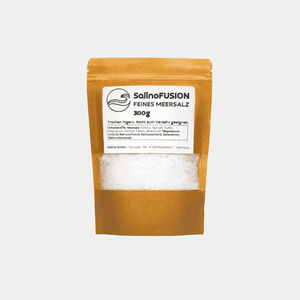
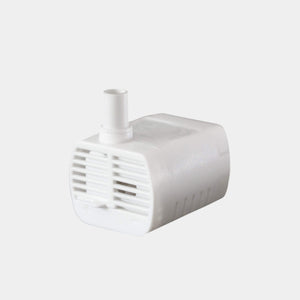
For those seeking practical ways to create a respiratory-friendly atmosphere in their own homes, various approaches are available. Besides traditional air purifiers and targeted ventilation, creating a saline microclimate can also play a role. Products like the Mini-Saline – a compact graduation tower for living spaces – aim to integrate the principle of salt inhalation into everyday life. Salt solutions trickle through porous structures, producing finely dispersed aerosols that can be inhaled.
Such aids are not a substitute for medical treatment and are not a panacea for the systemic problems of air pollution. However, for some people, they can be a building block in a larger concept of self-care – a way to make their own four walls a place where breathing is a little easier. Especially in times when the outside air is polluted, such a retreat with improved air quality can restore a measure of quality of life.
The story of the country air that makes people sick is a story of awakening. Of realizing that not everything that appears rural and natural is automatically healthy. That intensive animal farming comes at a price – and that this price is paid not only by the animals, but also by the people who live and breathe in their vicinity. It is a story that demands solutions – large, structural solutions as well as small, personal strategies. And it is a story that continues, every day, with every breath.